B.S. & M.S. IN EARTH SCIENCE COMPOSITE TEACHING
About the Program
 The Earth Science Composite Teaching degree is an interdisciplinary program designed
to provide students with a strong foundation in the geosciences while developing the
knowledge and skills needed to teach science at the middle school and high school
levels. Students complete coursework in geoscience, life science, chemistry, and physics,
along with education courses that introduce the fundamentals of teaching and prepare
them for entry into a teacher licensure program.
The Earth Science Composite Teaching degree is an interdisciplinary program designed
to provide students with a strong foundation in the geosciences while developing the
knowledge and skills needed to teach science at the middle school and high school
levels. Students complete coursework in geoscience, life science, chemistry, and physics,
along with education courses that introduce the fundamentals of teaching and prepare
them for entry into a teacher licensure program.
Students in the major also have the opportunity to continue into the BS/MEd in Earth Science Teaching program, an accelerated pathway that allows them to earn a B.S. in Earth Science Teaching, an M.Ed. in Educational Psychology, and a Utah secondary teaching license in as little as five years.
When combined with teacher licensure, the Earth Science Composite Teaching degree prepares graduates to teach Middle School Science, High School Earth and Space Science, Astronomy, Geology, Meteorology, AP Environmental Science, and a variety of other Earth science electives. Graduates leave the program with both deep content knowledge and the pedagogical expertise needed to support student learning in diverse classroom settings.
Getting Started
- Meet with your academic advisor
- Take the following introductory courses:
- GEO 1100: Evolving Earth – This course introduces the many systems that drive change on Earth through time: tectonics, water, carbon, life, and climate.
- GEO 2500: Wasatch in the Field – This field and lab course explores the Wasatch region and related geological phenomena using techniques from a broad array of geoscience disciplines.
- EDU 1010: Introduction to Teaching – This course introduces current issues affecting education today through on-campus and K-12 school-based experiences and is a prerequisite to the teacher licensure program.
- Volunteer with after-school programs, the Bennion Center or the Natural History Museum of Utah
- Apply to the College of Science Learning Assistant program
- Become a tutor
- Major Specific Scholarships - Awarded each year to Earth Science Composite Teaching Students
- Merit and Need-Based Scholarships - Multiple awards each spring based on student GPA, leadership, and accomplishments. Additional scholarships available to support students with specific financial needs.
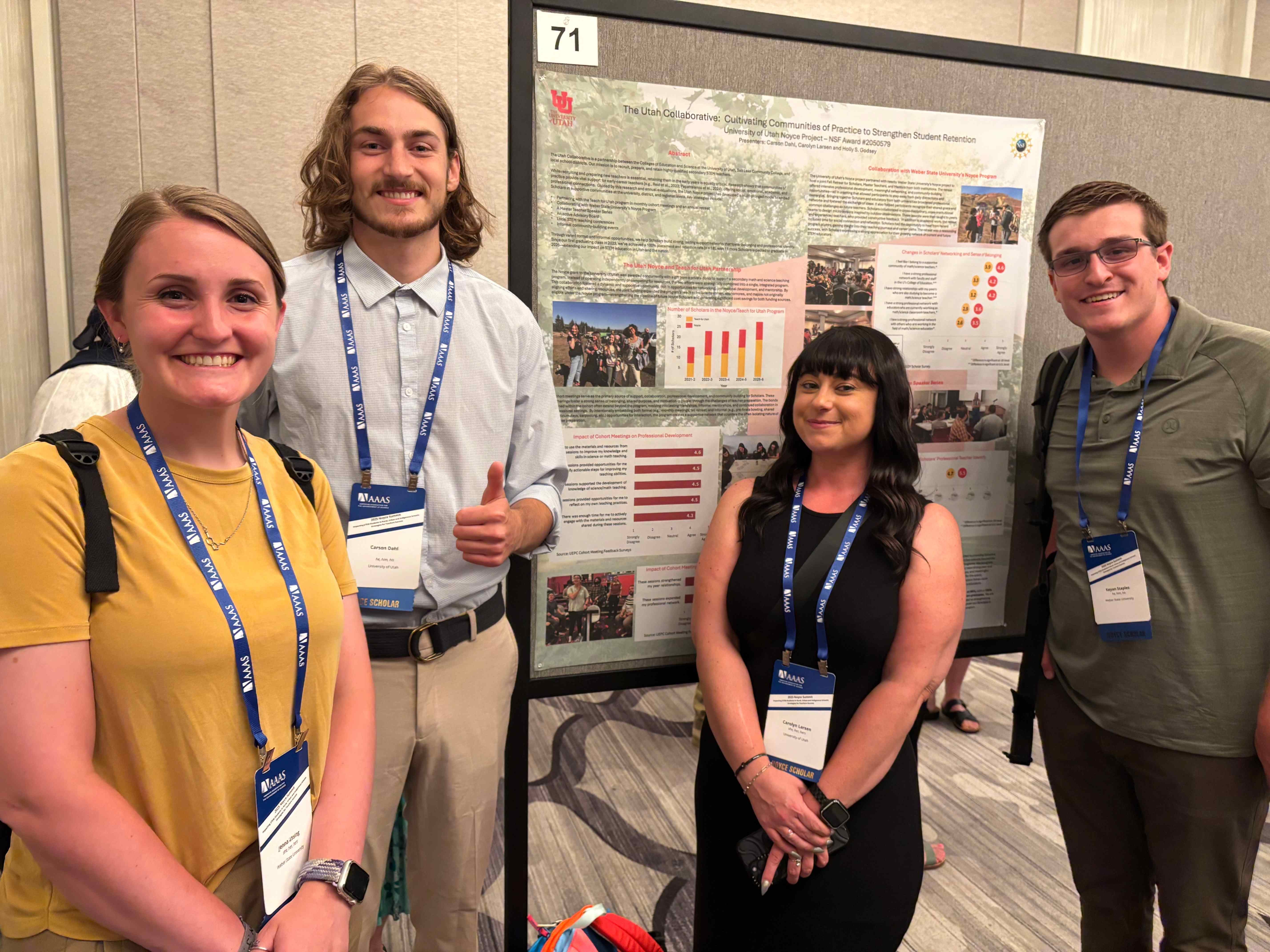
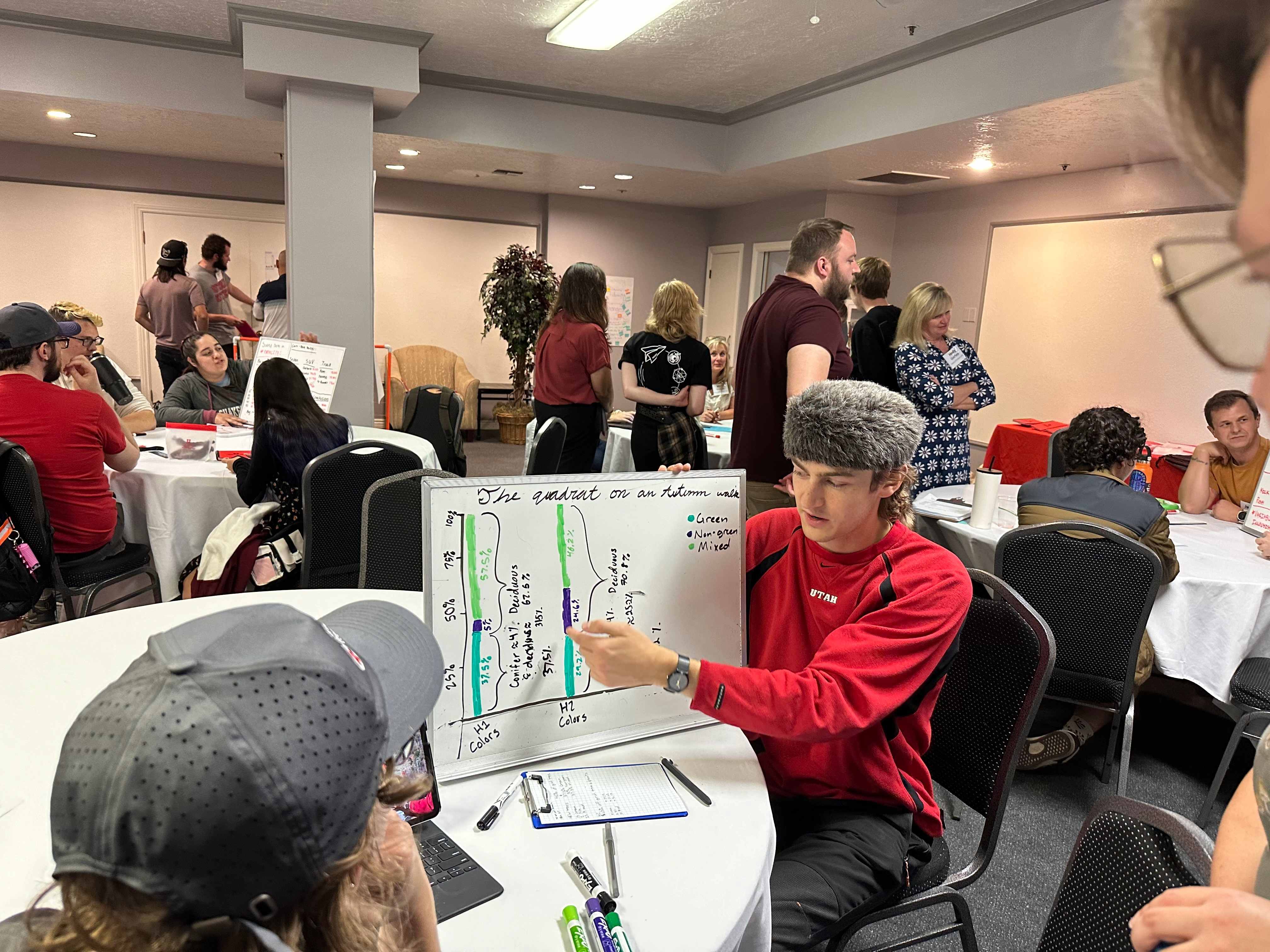
- NSF Noyce Teacher Scholarship Program - provides $10,000 annually to students in the BS/MEd Earth Science Teaching program during their junior, senior, and master’s/licensure years. In addition to financial support, Scholars participate in a cohort-based professional development program alongside future biology, chemistry, physics, and mathematics teachers.
- Terrel H. Bell Education Scholarship Program- A scholarship for tuition and books for up to 4 years given to first generation students, or high achieving students who plan on getting a degree in teaching.
- Student Research and Travel Grants - Awarded to students to attend professional meetings, conduct research, and participate in professional opportunities that enhance their college experience.
- Field Camp Scholarships - Awarded to substantially reduce the cost of our capstone geoscience field camp experience.
Why become an Earth Science Teacher?
- Teachers in the U.S. rate their lives better than all other occupation groups, trailing only physicians.
- Teachers have flexible summers that they can use to travel, learn, spend time with family and friends, and recharge.
- Science teachers report having higher or equivalent overall job satisfaction compared to other STEM professionals.
- The average starting salary for a teacher with a BS degree in Granite, Jordan or Canyons School district (in Utah) is $62,787, and $73,000 for those with a MEd degree – and that is for a 9-month contract!